Imagine a small child sitting quietly in a living room, observing the chaotic world of adults around them. Over time, without a single word being spoken, this child begins to draft a rulebook for survival. They notice that when they cry, the adults in the room become stressed, angry, or perhaps they simply walk away. In that developing brain, a silent but powerful equation can be written: My emotions equal a burden. To be loved, I must be invisible. This is not a conscious choice; it is an adaptation. The child learns to compress their needs, to become “low maintenance,” and to equate safety with silence. Fast forward thirty years, and that same child is now a successful adult who seemingly has it all together, yet they find themselves perpetually lonely even in the most intimate relationships. They are bafflingly unable to ask for support when they are hurting, trapped by a rule written decades ago that says speaking up is dangerous.
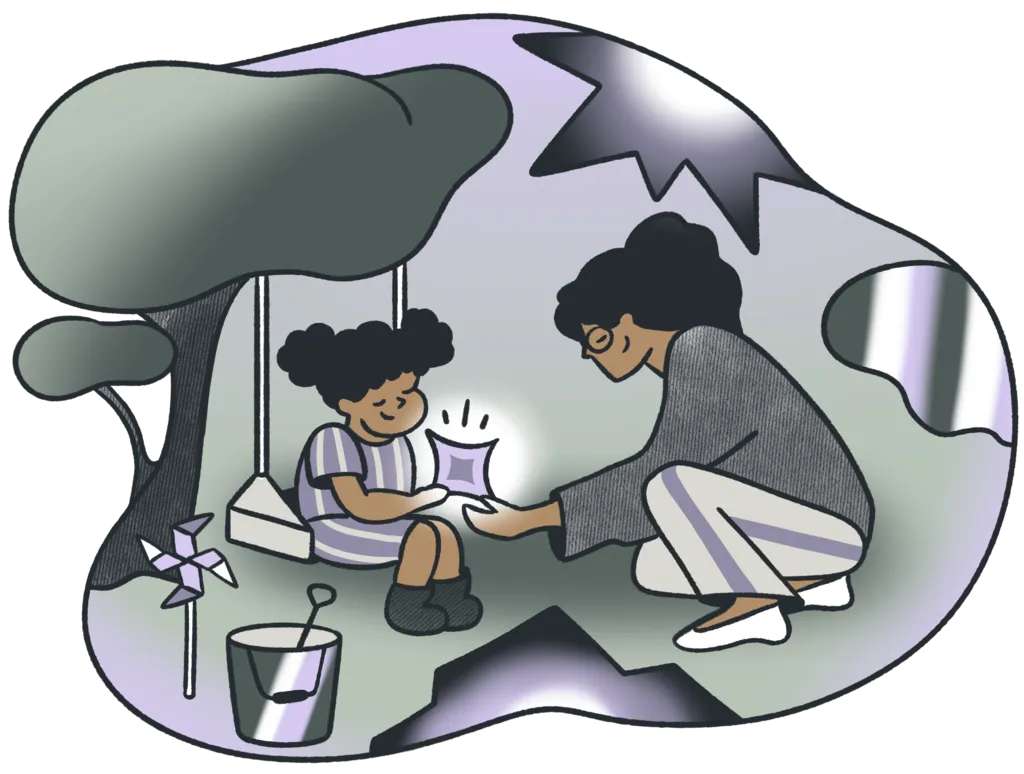
This phenomenon is often dismissed as “baggage” or simply “the past,” but from a psychological and neurobiological perspective, it is something far more tangible. The past is not merely a collection of fading memories; it is a physical reality living within your nervous system. When we talk about the “Inner Child,” we are not speaking in abstract spiritual metaphors. We are describing preserved neural networks—fragments of memory, emotion, and bodily sensation—that were encoded during our most formative years. These networks do not simply dissolve when we blow out the candles on our eighteenth birthday. Instead, they remain active, lurking beneath the surface of our conscious awareness, driving our reactions to our partners, our bosses, and our friends. Research has consistently shown that early childhood experiences shape the architecture of the developing brain (Perry, 2002), creating the lens through which we interpret our adult reality.
Consequently, when we feel an inexplicable wave of panic because a partner hasn’t texted back, or a sudden shutdown when someone asks how we are really doing, we are not reacting solely to the present moment. We are experiencing a “time travel” of sorts. The adaptive strategies that kept us safe as children—hiding our feelings to avoid being a burden—become maladaptive barriers to connection as adults. We find ourselves trapped in a painful paradox: we crave deep intimacy, yet our own internal wiring pushes it away to keep us “safe” according to the outdated rules of our youth. Understanding this is the first step toward healing. It requires us to look beyond the symptoms of our relationship struggles and recognize that the call is coming from inside the house. We must acknowledge that early attachment patterns lay the foundation for adult emotional regulation (Bowlby, 1969), and that to change our future, we must first learn to communicate with the past versions of ourselves that are still very much alive within us.
The Science of "Stuckness": Neural Networks and Ego States
To understand why we repeat these painful patterns, we have to look at the mechanics of the brain itself. You may have heard the Hebbian axiom: “Neurons that fire together, wire together.” This means that when a specific thought, feeling, and reaction occur simultaneously—like feeling sad, being ignored, and subsequently withdrawing—they eventually fuse into a single, automatic circuit. If you repeated this cycle hundreds of times as a child, that circuit became a superhighway. The “Inner Child,” therefore, can be best understood as a “stuck neural network.” It is a cluster of memories and defense mechanisms frozen in time, waiting for a trigger to light up that superhighway again. When we are triggered in the present, our brain effectively bypasses our logical, adult frontal cortex and defaults to this well-worn, lightning-fast path of least resistance. We don’t “choose” to shut down; our brain simply executes the code it wrote to survive childhood.
One useful way to conceptualize this phenomenon comes from a framework in psychotherapy known as Ego State Theory. Rather than seeing our personality as a single, unified block, Ego State Theory suggests that our psyche is more like a family of distinct “parts” or “states,” each with its own history, feelings, and strategies for coping (Watkins & Watkins, 1997). These include what are known as the “Child” states (holding our needs and traumas) and the “Protector” or “Parent” states (holding the rules and criticisms). When that feeling of being a burden arises, a “guarded” part of you—perhaps an internal protector—steps in to shield you from the perceived danger of vulnerability. This part takes over the driver’s seat, steering you toward isolation or defensiveness, convinced it is saving you from rejection. It is crucial to realize that this part is not trying to sabotage your happiness; it is dutifully executing an old protection order, unaware that the war is over and you are now an adult capable of handling rejection.
The Invisible Conflict: Cognitive Dissonance in Relationships
This clash between our adult reality and our internal programming creates a profound sense of friction, often experienced as cognitive dissonance. On one hand, the adult self desperately craves connection, intimacy, and the comfort of being vulnerable with a partner. We intellectually understand that relationships require openness, and we want to be the kind of partner who shares their feelings. On the other hand, the subconscious block—that neural superhighway—quietly but powerfully screams that openness is a trap. The result is a paralyzing internal stalemate: “I want to open up, but I feel like I physically can’t.” This invisible conflict leaves us feeling broken or defective, as if we are fighting a war against our own instincts. We may find ourselves pushing partners away at the exact moment we want them closer, baffling both them and ourselves.
This dynamic is deeply rooted in our attachment style, which is essentially the blueprint for how we relate to others based on our early caregivers. For those with avoidant or anxious attachment tendencies, this conflict is the baseline of existence. Research indicates that insecure attachment styles are significant predictors of lower relationship satisfaction (Vollmann, Sprang, & Femke van de Brink, 2019). An avoidant style, often born from the “emotions = burden” rule, acts as a preemptive strike against rejection. It is a protective mechanism gone wrong. The brain calculates that if it never relies on anyone, it can never be let down. However, this safety comes at the cost of the very thing we need most: human connection. We end up safe, yes, but profoundly alone, trapped behind a wall of our own making, watching opportunities for love pass us by because our internal alarm system is flagging them as dangerous threats.
Anatomy of a Trigger: The "Couch" Scenario
To see this neural machinery in action, let’s look at a seemingly mundane domestic moment that often spirals into emotional catastrophe. Imagine you wake up in the middle of the night and notice the other side of the bed is empty. You walk into the living room and find your partner asleep on the couch. In reality, the situation is benign, perhaps even considerate: your partner came home late, saw you sleeping soundly, and decided to sleep on the couch to avoid waking you. It is an act of care. However, for the person operating with an abandoned Inner Child, the brain does not register “care.” It registers a threat. The visual input of the empty bed bypasses the logical brain and hits that old “emotions = burden” neural network.
Almost instantly, an automatic interpretation floods your system: They don’t want to be near me. They are pulling away. I am unlovable. This is not a quiet thought; it is a physiological event. Your heart rate spikes, your stomach drops, and cortisol floods your bloodstream. You are no longer an adult assessing a situation; you are a scared child reacting to perceived abandonment. Cognitive distortions, such as personalization and emotional reasoning, hijack our ability to perceive reality accurately (Beck, 1976). Instead of seeing a tired partner trying to let you sleep, you see a confirmation of your deepest fear: that you are not enough to keep someone close. The “couch” becomes a symbol of the distance you have always feared, and your brain treats this symbolic distance as a life-or-death emergency.
The tragedy of this trigger is what happens next: the spiral of the self-fulfilling prophecy. Because your brain screams “Rejection!”, you react defensively. You might wake them up with a cold, sarcastic comment, or perhaps you retreat to the bedroom and give them the silent treatment the next morning. You withdraw to protect yourself. Your partner, confused by your hostility after doing something they thought was nice, feels attacked and withdraws in return. Research on rejection sensitivity demonstrates that anxiously expecting rejection often leads to behaviors that elicit the very rejection we fear (Downey & Feldman, 1996). By acting on the hallucination of abandonment, you inadvertently create the distance you were trying to avoid. The cycle confirms the old rule: “See? I really am unlovable” strengthening the neural network for next time.
Reparenting: Rewiring the Automatic Response
Breaking this cycle requires more than just willpower; it requires “reparenting.” This term often makes people uncomfortable, conjuring images of indulging childish whims, but in a clinical context, reparenting is simply neuroplasticity in action. It is the process of using your adult consciousness to interrupt the automatic firing of those old neural networks. When we reparent, we are essentially building a new road. We are teaching the brain that the old “survival” route—withdrawal and silence—is no longer necessary because we can now generate our own safety. We are recruiting the prefrontal cortex to soothe the limbic system, a skill we may not have learned from our caregivers but can learn now.
This process works by providing the “stuck” part of us—that triggered Ego State—with the safety it lacked in childhood. When you see your partner on the couch and feel that spike of panic, reparenting involves pausing to acknowledge the inner child. Instead of letting the “Protector” lash out, the Adult Self steps in and says, “I know this feels like rejection, but we are safe. They are just sleeping.” Dr. Louis Cozolino’s work on the social brain highlights that warm, responsive relationships—even with oneself—promote neural growth and integration (Cozolino, 2014). By offering compassion to your internal distress rather than judgment, you allow your nervous system to regulate. This biological “down-regulation” brings your adult brain back online, enabling you to reassess the reality of the situation and choose a response that builds connection rather than destroys it (Siegel, 2009).
Practical Application: The Power of "The Ask"
The ultimate goal of reparenting is not just to feel calmer, but to act differently. This brings us to the pivotal moment of change, which I call “The Ask.” Let’s return to the couch scenario. In the old script, you would lie in bed, staring at the ceiling, letting the narrative of abandonment calcify into resentment. You would wake up the next morning cold and distant, punishing your partner for a crime they didn’t commit. But when the Adult Self is in charge, you have a new option. You can acknowledge the fear without obeying it. You can walk into the living room, gently wake your partner, and say the very thing your Inner Child was terrified to say: “Hey, I woke up and missed you. Will you come back to bed and cuddle with me?”
This sounds deceptively simple, yet for someone with an “emotions = burden” rule, it is a radical act of bravery. It requires overriding the visceral instinct to hide. When you make “The Ask,” you are conducting a behavioral experiment that directly challenges your old neural wiring. You are giving your partner the opportunity to meet your needs, rather than assuming they won’t. Research suggests that assertive communication of needs is a key component of relationship satisfaction and personal well-being (Alberti & Emmons, 2017). Instead of the spiral of silence, you create a moment of connection. If your partner responds with warmth—which they likely will, given the benign intent of their sleep—your brain receives a powerful new data point: I asked for what I needed, and I was not rejected. I was loved.
Over time, these small moments of courage shift the entire trajectory of your relationships. Every time you choose “The Ask” over the “Spiral,” you are weakening the old neural highway and paving a new one. You are teaching your nervous system that your needs are not a burden, but an invitation for intimacy. This does not mean the fear will vanish overnight; the old “stuck” network may still spark up from time to time. However, the intensity will lessen. You will begin to trust that you can navigate the vulnerability of love not because you are perfect, but because you possess the tools to advocate for the frightened parts of yourself.
The Path Forward: Reclaiming Your Narrative
Healing the Inner Child is not about regressing into the past or blaming our caregivers for every struggle we face today. It is about taking responsibility for the neural legacy we carry. We must recognize that the strategies that served us at age five could very likely be sabotaging us at age thirty-five. By understanding the science of our “stuckness”—the neural networks, the ego states, and the cognitive dissonance—we can stop fighting ourselves and start collaborating with our internal systems. We can move from a state of reactive protection to one of conscious connection.
Ultimately, attending to past versions of you can be one of the most effective ways to secure your future. When we stop running from our triggers and start listening to the stories they tell, we unlock a capacity for love that was previously inaccessible. If you find yourself constantly trapped in these loops of withdrawal and misunderstanding, know that you do not have to navigate this rewiring process alone. Therapy offers a unique container to explore these “stuck” parts safely. Through my practice, I help individuals and couples identify these hidden scripts and author new ones, transforming old wounds into the foundation for profound, lasting intimacy.
References
Alberti, R. E., & Emmons, M. L. (2017). Your Perfect Right: Assertiveness and Equality in Your Life and Relationships (10th ed.). Impact Publishers.
Beck, A. T. (1976). Cognitive Therapy and the Emotional Disorders. International Universities Press.
Bowlby, J. (1969). Attachment and Loss: Vol. 1. Attachment. Basic Books.
Cozolino, L. (2014). The Neuroscience of Human Relationships: Attachment and the Developing Social Brain (2nd ed.). W. W. Norton & Company.
Downey, G., & Feldman, S. I. (1996). Implications of rejection sensitivity for intimate relationships. Journal of Personality and Social Psychology, 70(6), 1327–1343.
Mikulincer, M., & Shaver, P. R. (2007). Attachment in Adulthood: Structure, Dynamics, and Change. Guilford Press.
Perry, B. D. (2002). Childhood experience and the expression of genetic potential: What childhood neglect tells us about nature and nurture. Brain and Mind, 3(1), 79–100.
Siegel, D. J. (2009). Mindful Awareness, Mindsight, and Neural Integration. The Humanistic Psychologist, 37(2), 137–158.
Watkins, J. G., & Watkins, H. H. (1997). Ego States: Theory and Therapy. W. W. Norton & Company.
About Dr. Ashley Welch